

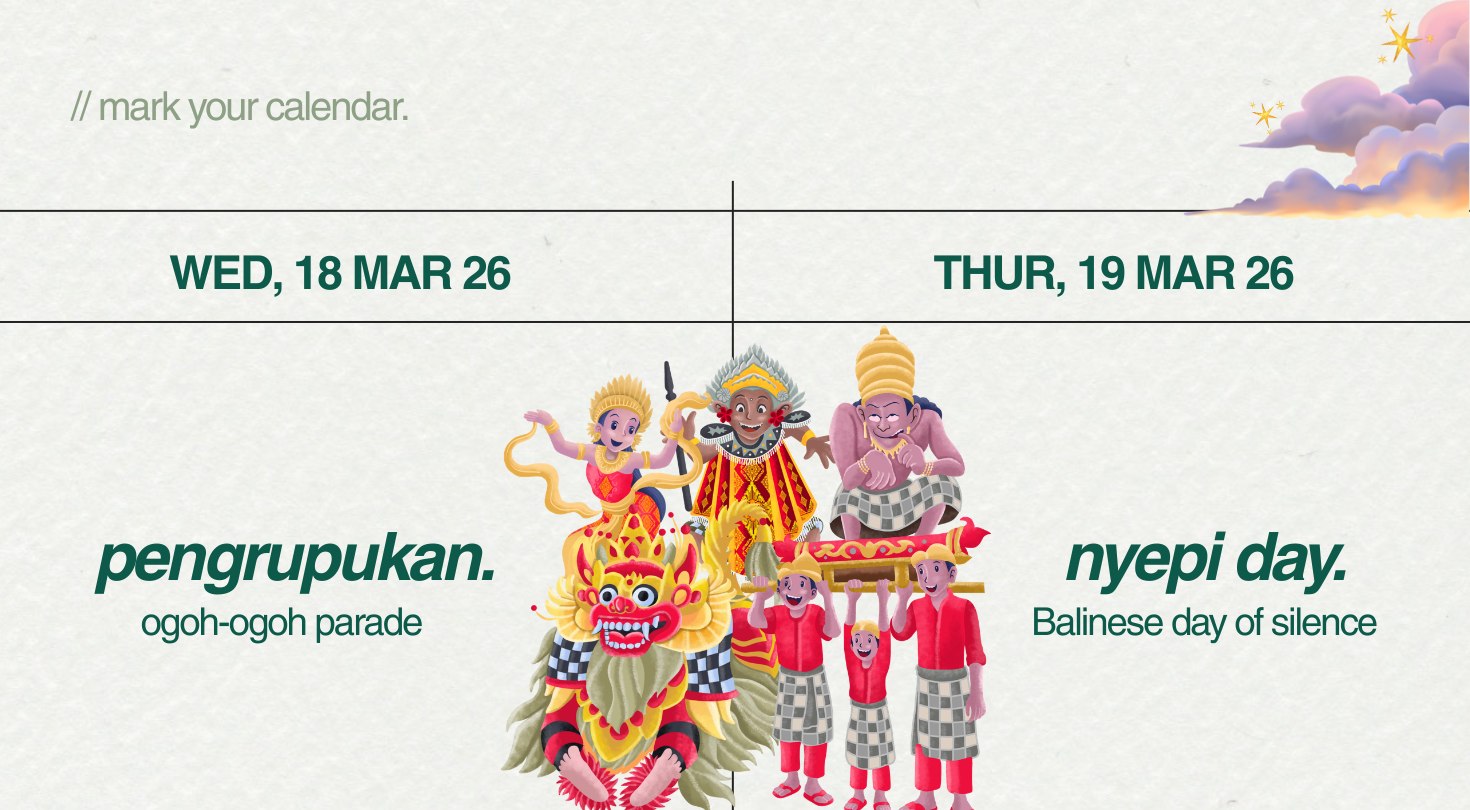
Two important days are coming up in Bali: Ogoh-Ogoh and, the day after, Nyepi. These two celebrations are deeply connected and play a big role in Balinese Hindu culture. If you’re working remotely in Canggu and spending time at PUCO Rooftop Coworking Space, it’s the perfect moment to learn what these days are about and how to experience them respectfully.
In this article, you’ll discover what Ogoh-Ogoh and Nyepi mean, how they are celebrated, and what you can expect as a visitor or digital nomad in Bali.
What Is Ogoh-Ogoh?
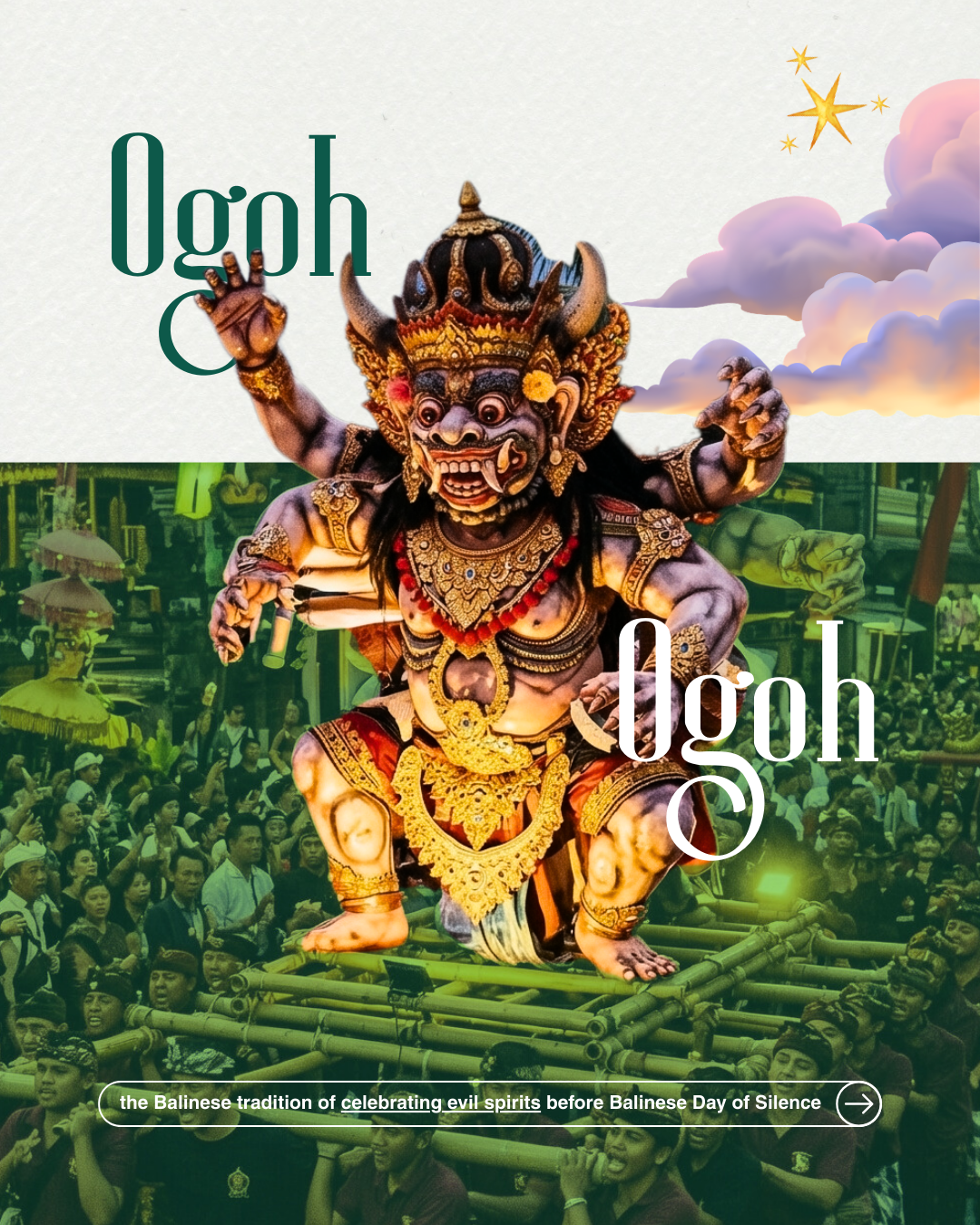
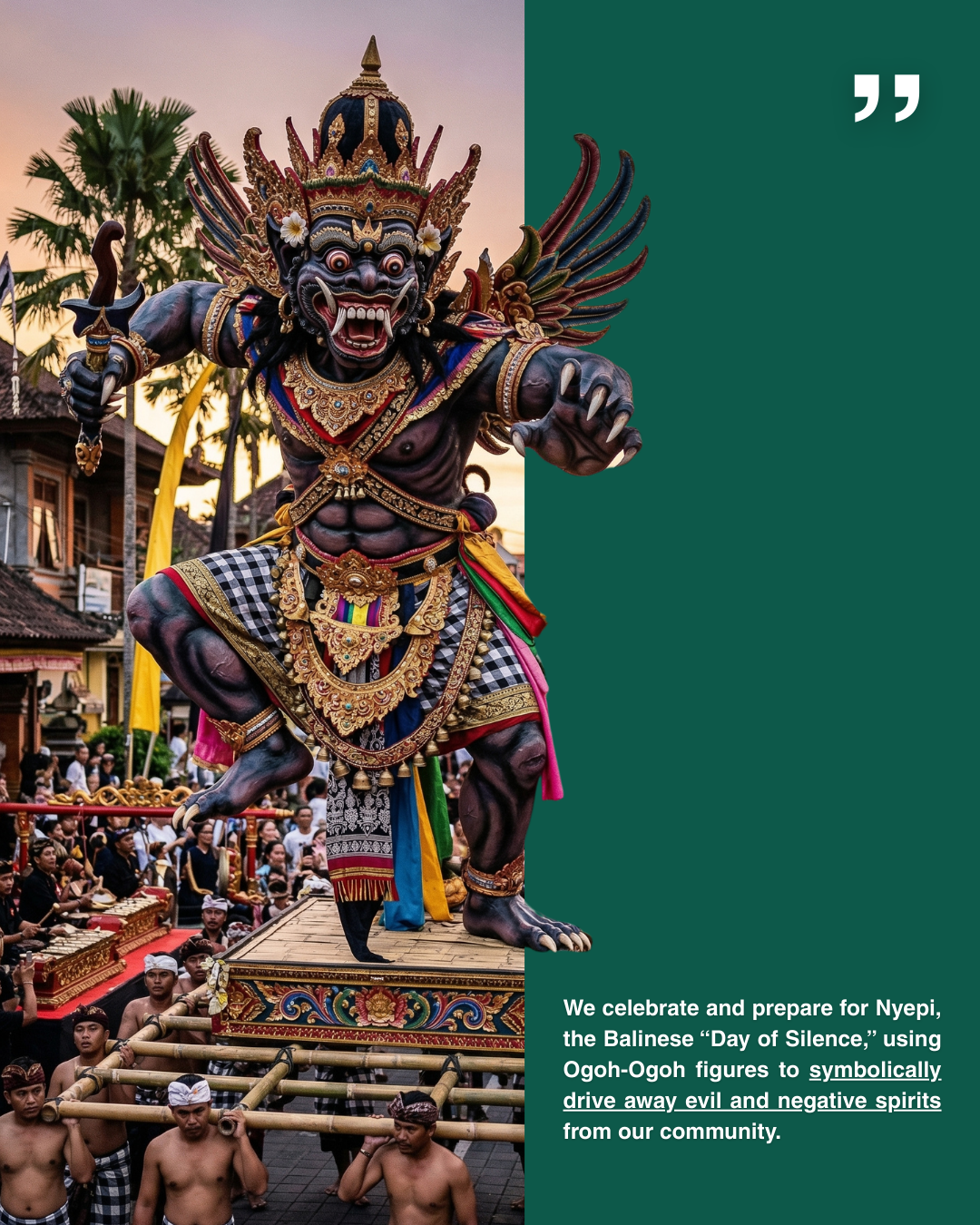
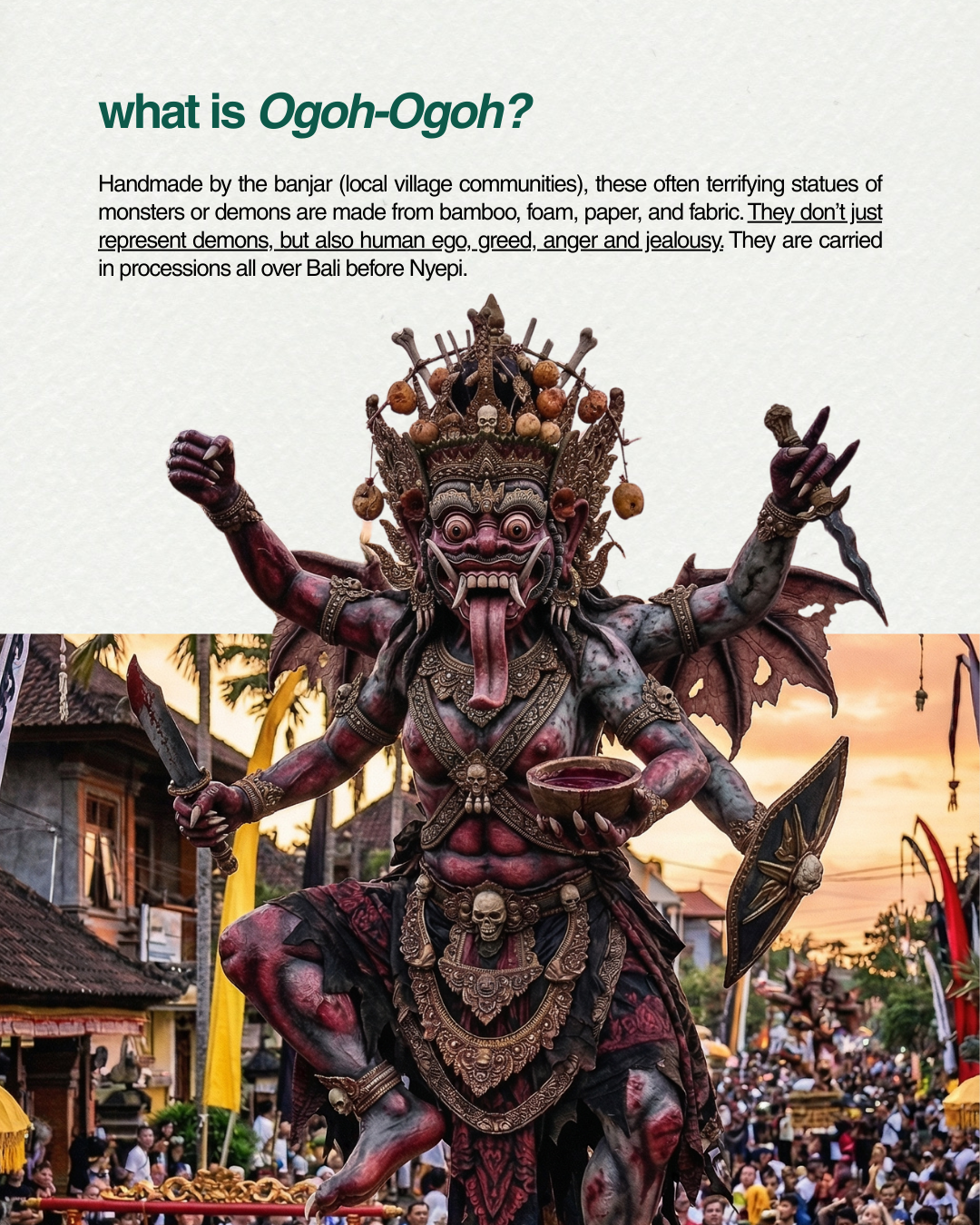
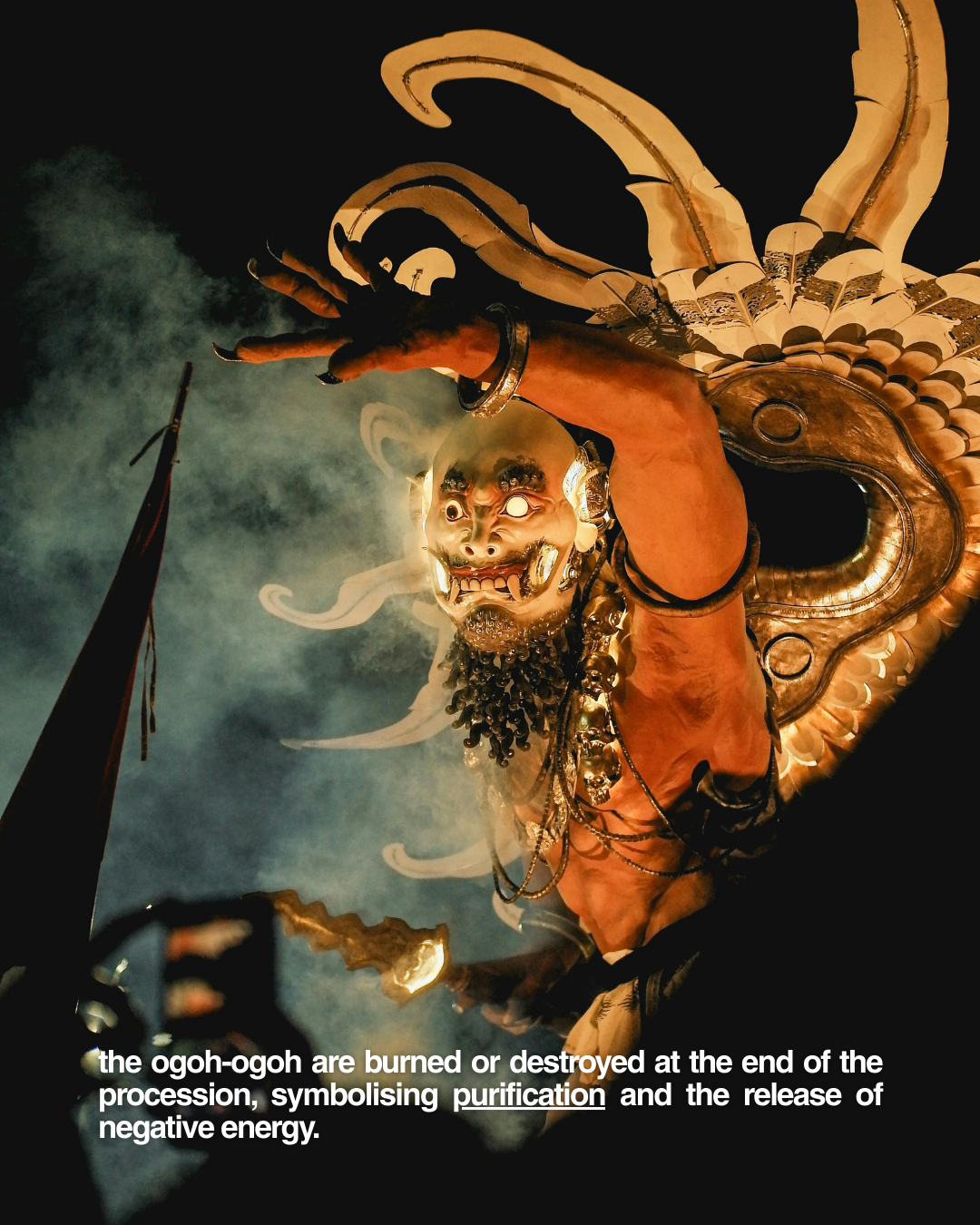
Ogoh-Ogoh is celebrated on the evening before Nyepi. It is one of the most spectacular cultural events in Bali and a must‑see if you are in Canggu. Ogoh-Ogoh are large, colourful, and sometimes scary statues made of bamboo, wood, and paper. They often represent demons, negative spirits, or human traits such as greed or anger. The statues symbolise bad energy that needs to be cleansed before the Balinese New Year. They are usually made by the men of the local village community, called the banjar.
The Ogoh-Ogoh Parade
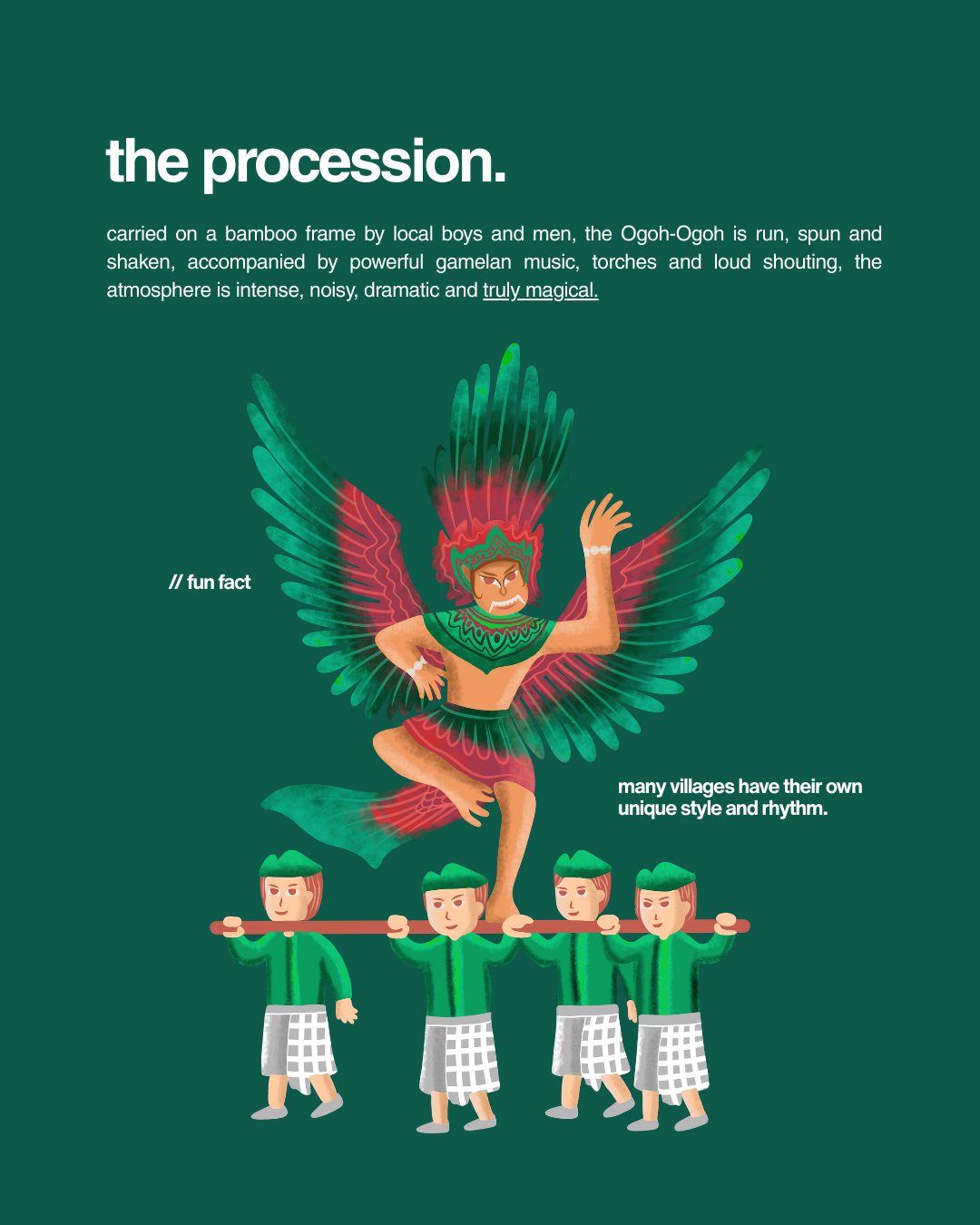
On the evening before Nyepi, villages all over Bali organise Ogoh-Ogoh parades. Groups of young men carry the statues through the streets on bamboo frames, often with traditional gamelan music, drums, and loud noises.
- The noise is meant to scare away evil spirits
- The statues are spun and shaken at crossroads to confuse and drive away negativity
- At the end of the procession, some Ogoh-Ogoh are symbolically burned or destroyed
If you are staying near PUCO, you will likely see local processions in the surrounding streets or near temples. It’s a powerful cultural experience and an amazing photo opportunity but be respectful and follow local guidance.
What Is Nyepi?
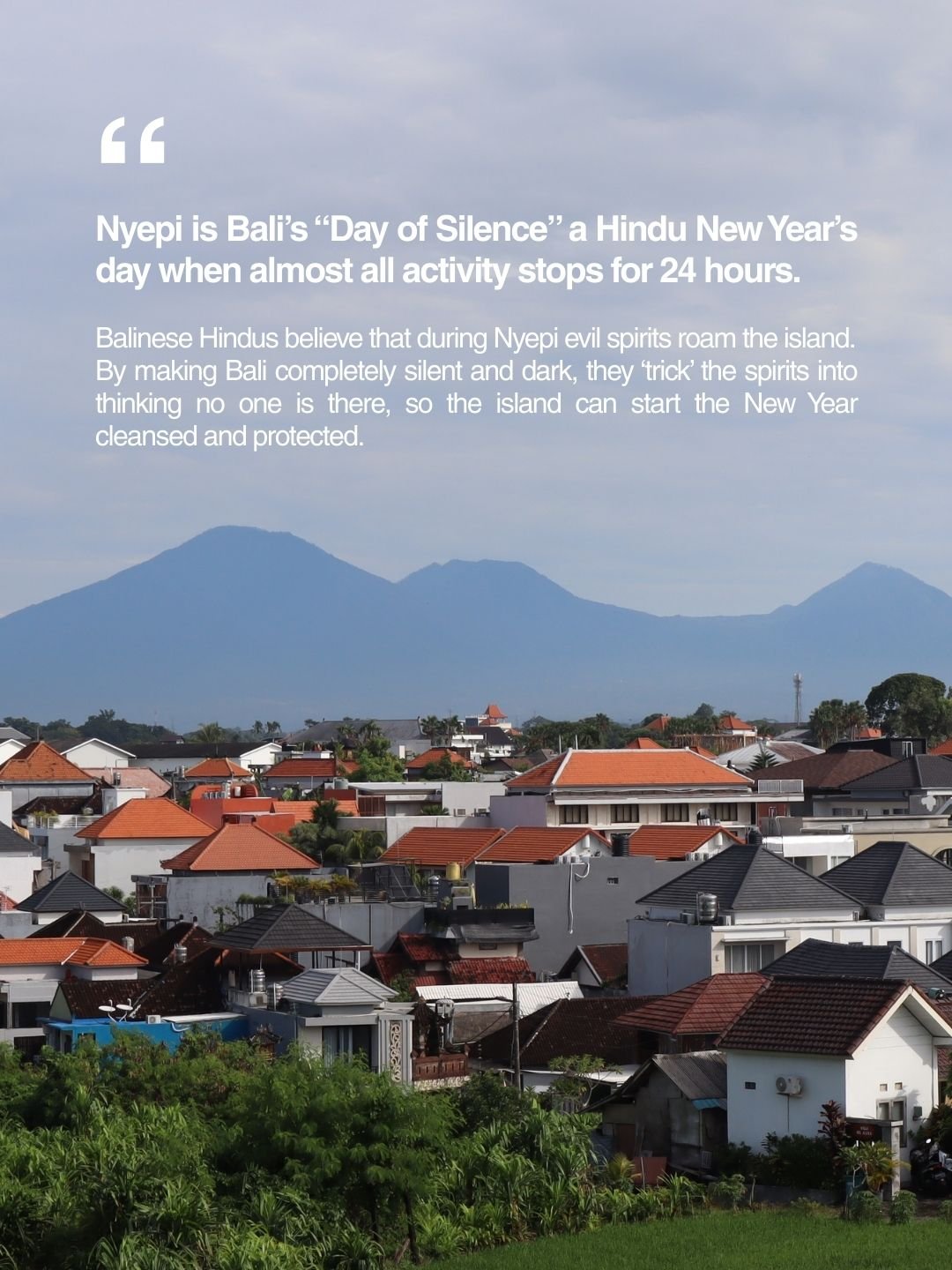
Nyepi is the Balinese Day of Silence. It marks the Balinese New Year according to the Saka calendar. It takes place the day after the Ogoh-Ogoh celebrations and feels completely different.
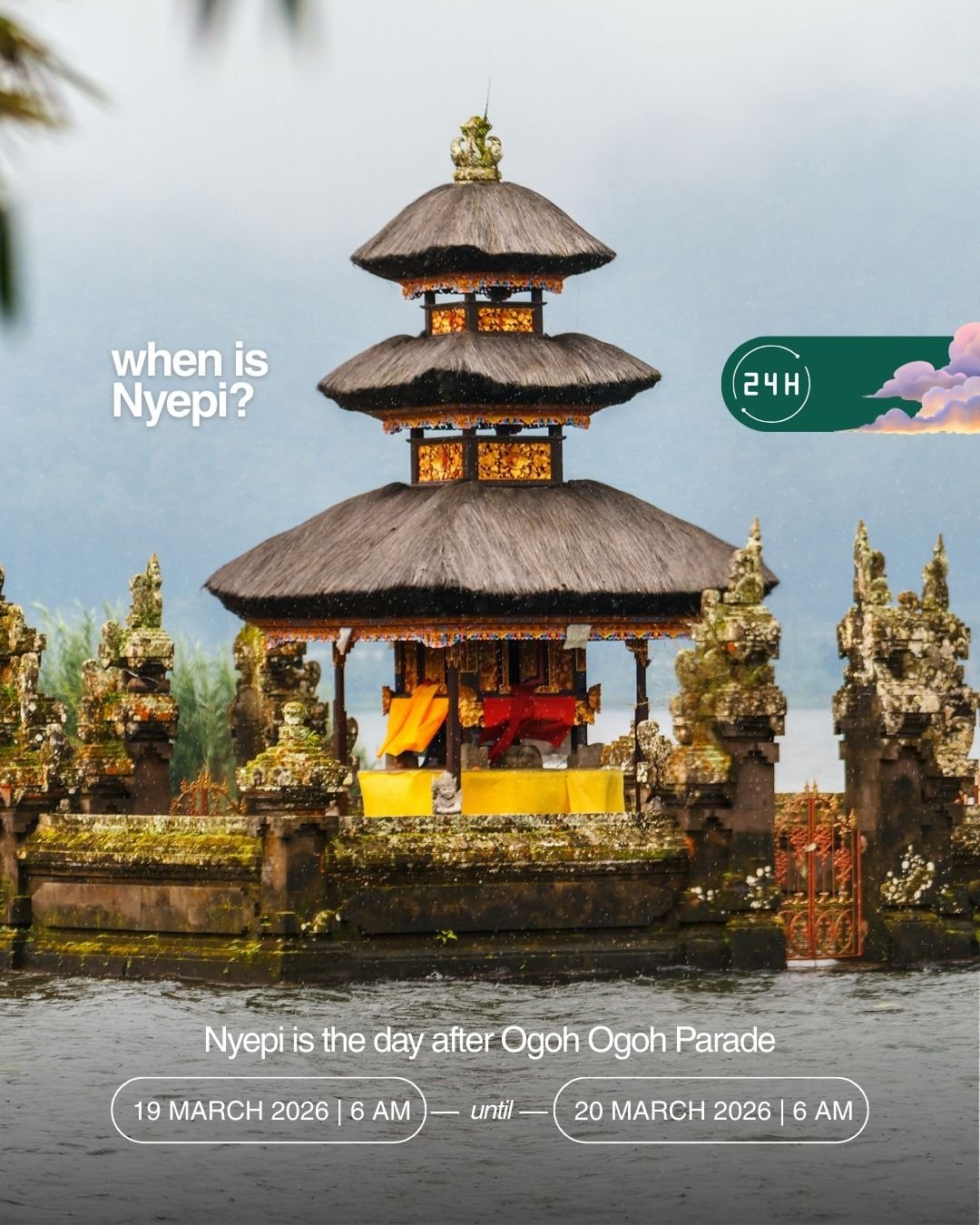
Nyepi is about self‑reflection, purification, and a spiritual reset. After the noise and energy of Ogoh-Ogoh, the entire island becomes quiet. By making Bali silent and dark, negative spirits are believed to think the island is empty and leave. Nyepi lasts for 24 hours, from 6 AM to 6 AM the next day.
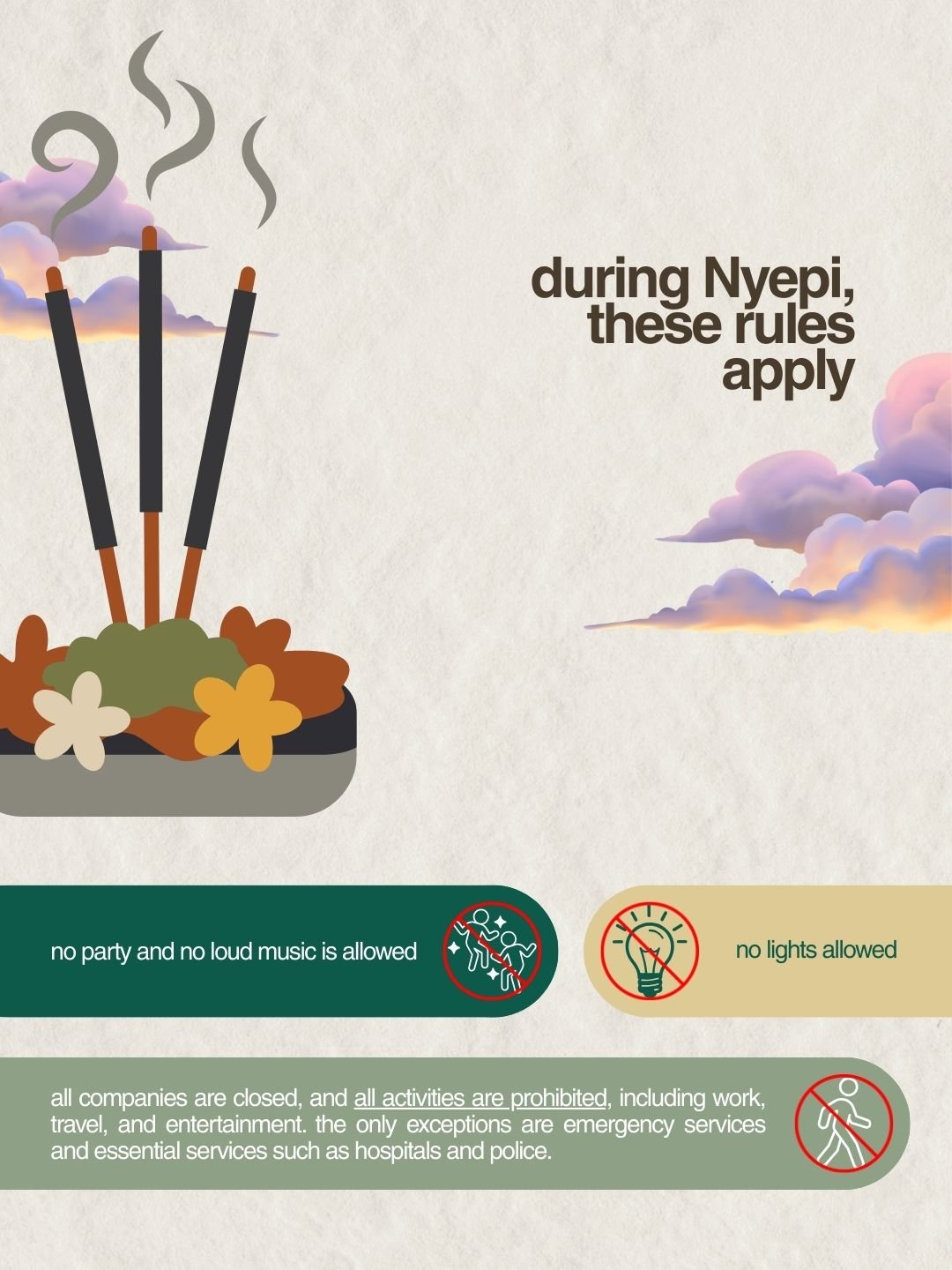
During this time, strict rules are followed:
What Do Ogoh-Ogoh and Nyepi Have in Common?
Although Ogoh-Ogoh and Nyepi feel very different, they are closely connected and part of the same spiritual cycle. Ogoh-Ogoh represents cleansing negativity through noise, ritual, and community action. Nyepi represents cleansing the self through silence, simplicity, and reflection.
First, the Balinese drive out bad spirits and negative energy with loud and vibrant parades. The following day, they turn inward: the island rests, people meditate, pray, and focus on inner peace. Together, these two days mark the Balinese New Year, symbolise a fresh start, and cleanse both the environment and the mind.

Experiencing Ogoh-Ogoh and Nyepi as a Remote Worker in Canggu
Staying in Canggu during Ogoh-Ogoh and Nyepi is a unique experience, especially if you’re a digital nomad or remote worker at PUCO Rooftop Coworking Space.
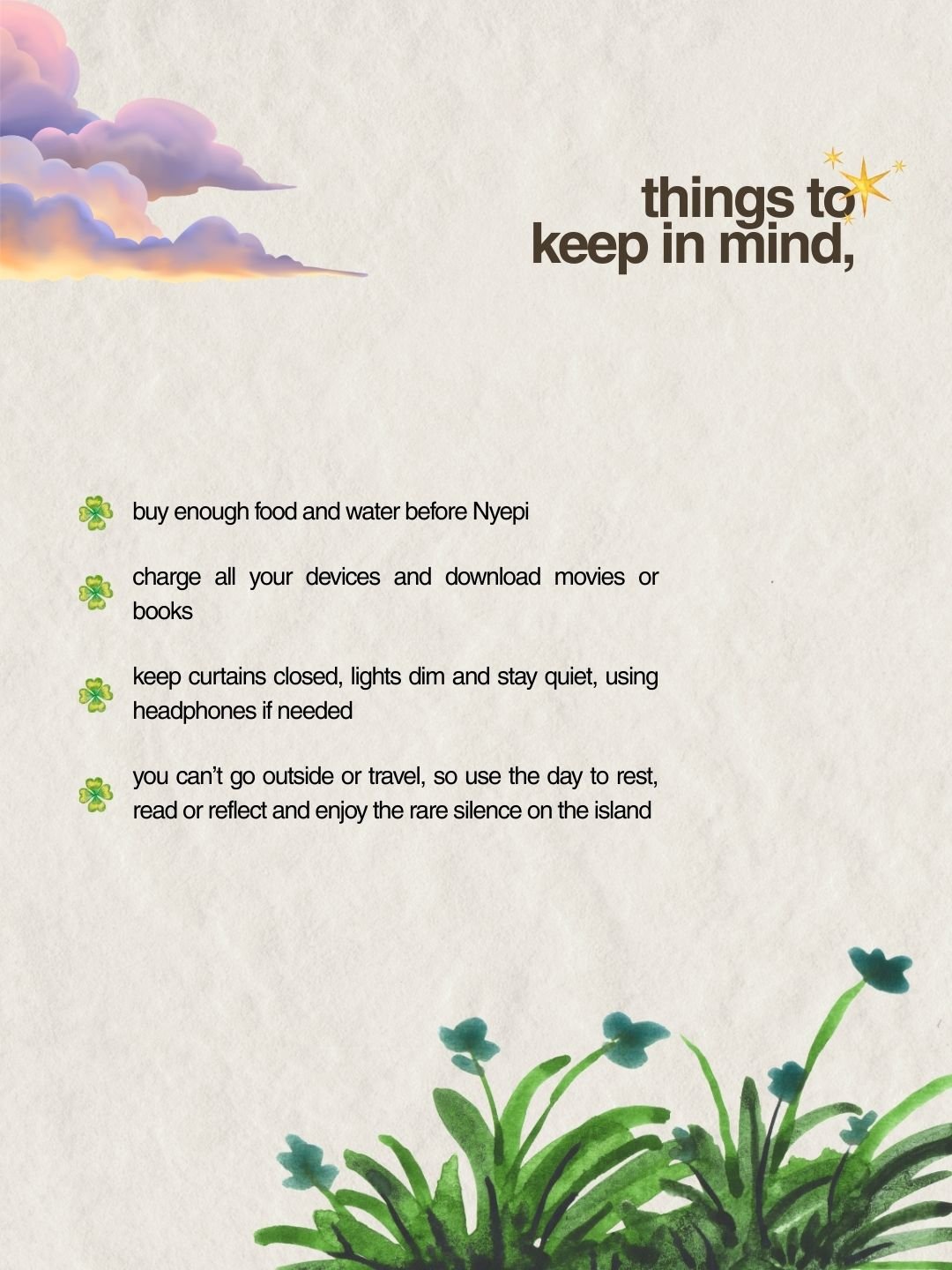
Before Nyepi, you can use your time at PUCO Rooftop to prepare your work and plans. Plan your work schedule in advance: internet and power usually stay on during Nyepi, but you must stay indoors at your accommodation, so it’s smart to download important files beforehand. Buy groceries and essentials ahead of time, because shops and supermarkets close for Nyepi. Make sure you have enough food, water, and anything else you might need for 24–36 hours. You can also ask locals, PUCO staff, or community members about nearby Ogoh-Ogoh parades in Canggu so you know where and when to go.
On Ogoh-Ogoh night, head out before sunset to main streets and temple areas. Dress modestly, avoid blocking the road or processions, and ask before taking close‑up photos of people. After the parades, return to your accommodation and rest before the quiet of Nyepi begins.
On Nyepi Day, you won’t be able to visit PUCO Rooftop Coworking Space Canggu, as everyone must stay at home or at their accommodation. Use this time to reflect on your Bali experience so far, read, write, plan new projects, or meditate. The silence is striking even in busy Canggu, you will hear almost no traffic. For many visitors, Nyepi becomes one of the most memorable days of their stay in Bali.

ABOUT PUCO ROOFTOP
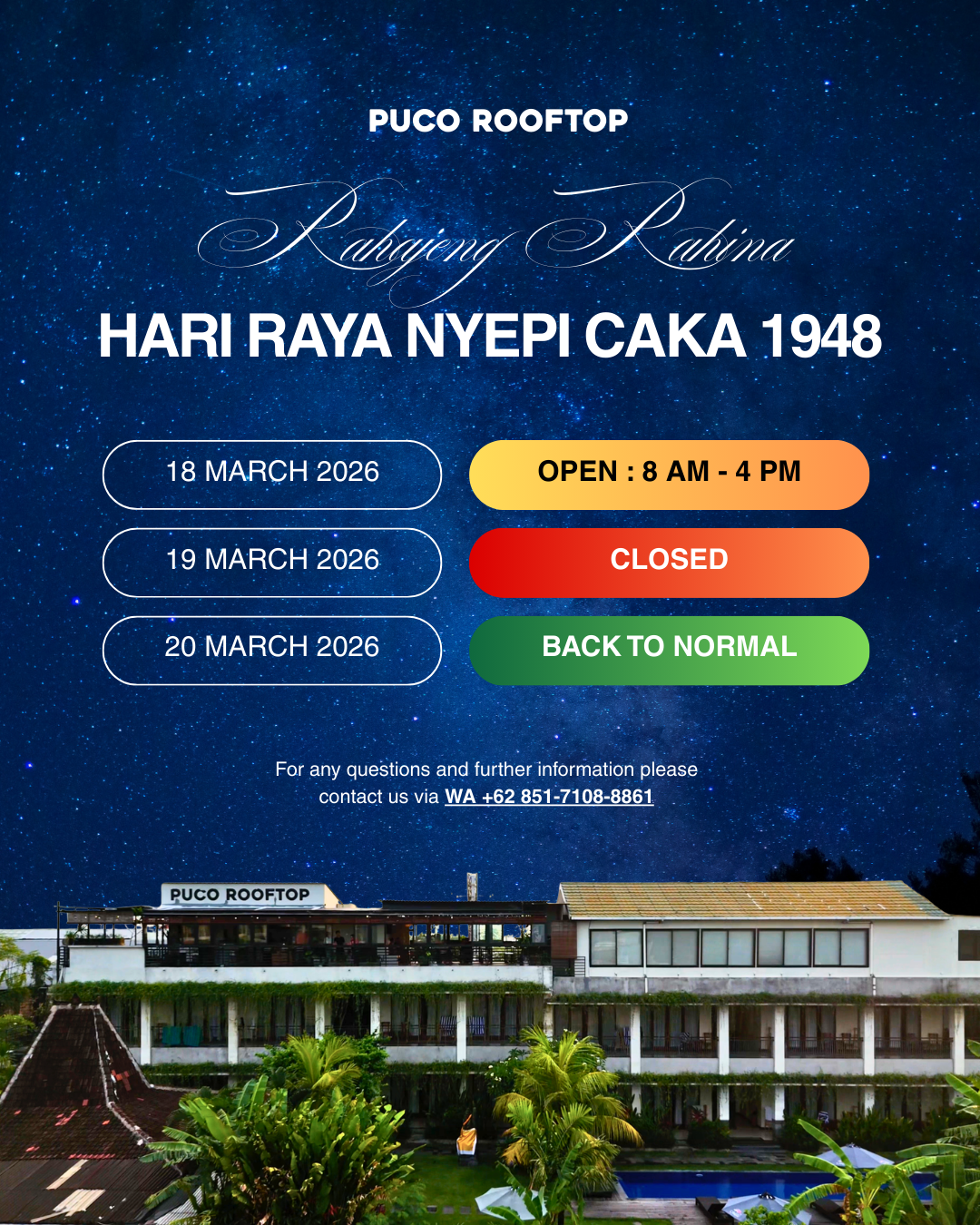
PUCO Rooftop Coworking Space Canggu is a coworking space in the heart of Canggu, ideal for digital nomads and remote workers who want a calm, productive environment before and after Nyepi in Bali. You can work in a quiet indoor office or outside on our open rooftop with views over Canggu. On Ogoh-Ogoh day (18 March) we will close at 16:00, and we will reopen on 20 March, the day after Nyepi.
If you are a remote worker or digital nomad looking for a coworking space in Canggu, PUCO Rooftop offers fast Wi‑Fi, comfortable desks, a silent work area, and a relaxed rooftop atmosphere. It’s a convenient base to prepare for Ogoh-Ogoh and Nyepi, and to get things done once Bali’s Day of Silence is over. By working from PUCO Rooftop Coworking Space Canggu, you can enjoy both the cultural side of Bali and a professional place to focus on your projects.
@pucorooftop
www.pucorooftop.com
Gg. Pratama 1A, Tibubeneng, Canggu, Bali